8 min read

Akrylic
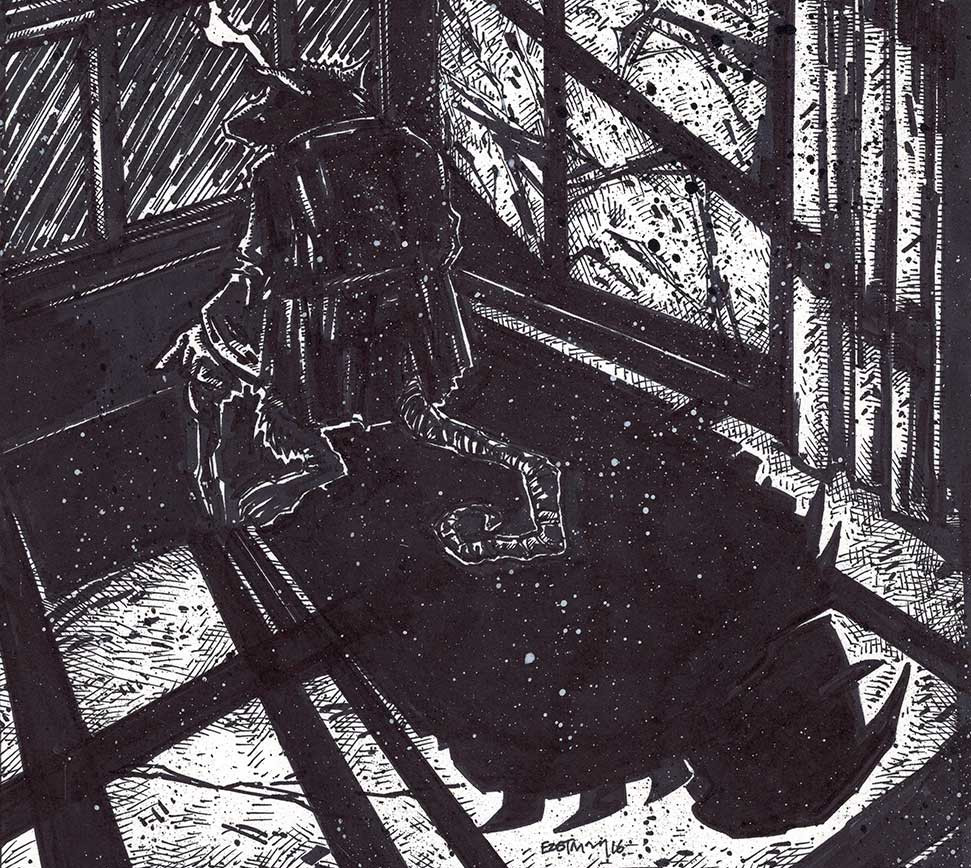
For generations, comic art has shaped how millions of people understand visual storytelling. From the silhouettes of Batman and Superman to Spider-Man swinging through the city, from Jack Kirby's cosmic worlds to Will Eisner's expressive storytelling, the work of Marvel, DC, Dark Horse, and countless independent creators has become part of our shared visual culture.
Yet despite their cultural impact, comic artists have historically occupied an unusual position in the art world.
Their work has influenced generations of artists, filmmakers, designers, and illustrators. Their characters have become global icons. Their original pages can demonstrate extraordinary technical skill and creative vision.
But for much of the 20th century, comic art was rarely treated with the same seriousness as other forms of visual art.
It was often categorized as commercial illustration, entertainment, or disposable popular culture rather than recognized as an artistic practice.
Today, that perception is changing.
Museums are acquiring original comic artwork. Galleries are exhibiting comic artists. Academic institutions are studying comics as an important visual language. Collectors are treating original pages as unique works of art rather than simply memorabilia.
The rise of original comic art raises a larger question:
Why did the art world take so long to recognize something that artists and audiences already understood?
For much of modern art history, a distinction developed between fine art and commercial art.
Fine art was traditionally associated with personal expression, galleries, museums, and artistic autonomy.
Commercial art was associated with practical purposes: advertising, publishing, entertainment, and commissioned work.
This distinction created a hierarchy.
A painting created in a studio and displayed in a gallery was often considered culturally significant. A drawing created for a comic book publisher, magazine, or newspaper was often considered a product created for a market.
The issue was not necessarily the quality of the work. It was the context in which it was created.
Art historian Michele H. Bogart has examined this divide extensively in her scholarship on American illustration, particularly in her book Artists, Advertising, and the Borders of Art. She argues that commercial illustrators occupied an uncertain place in the art world because their work combined artistic skill with commercial objectives. Rather than being judged solely on its aesthetic qualities, illustration was often evaluated according to the marketplace in which it was produced. Bogart shows that the boundary between fine art and commercial art was not a natural distinction but a cultural hierarchy shaped by institutions, critics, and changing ideas about artistic value.
Comic artists inherited many of the same assumptions. Because comics were mass-produced, widely distributed, and created for entertainment, critics often dismissed them as products rather than works of art.
However, this reasoning becomes complicated when examined historically.
Many respected art forms were also created within commercial systems. Renaissance artists worked for patrons. Architects create buildings for clients. Filmmakers work within studios. Designers create commissioned projects.
The presence of a commercial purpose has never automatically determined whether something has artistic value.
The challenge for superhero comic art was even greater because of its popularity.
Beginning with the creation of Superman in 1938 and the rise of Marvel and DC superhero comics, comic books became one of the most influential forms of popular entertainment.
However, popularity often worked against artistic recognition.
Superhero comics were associated with:
The original artwork used to create these comics was often treated simply as a production step before printing rather than as a finished artistic object.
A page of original comic art was viewed as a tool used to make a comic book, not as an artwork worthy of preservation.
Yet this perspective overlooked the artistic decisions happening on every page.
A comic artist is not simply illustrating a script. They are solving complex visual problems:
How do you create movement in a still image?
How do you control pacing across panels?
How do you communicate emotion through expression and body language?
How do you design characters, costumes, environments, and entire fictional worlds?
These are sophisticated artistic decisions.
The fact that these decisions were made within a commercial publishing system does not make them less creative.
Over time, the importance of comic artists themselves has become increasingly recognized.
Artists such as Jack Kirby transformed the possibilities of visual storytelling through explosive compositions, imaginative world-building, and a unique sense of movement.
Steve Ditko created a visual language for Spider-Man that combined expressive anatomy, emotional storytelling, and innovative page design.
Will Eisner expanded the possibilities of sequential storytelling through works such as The Spirit, influencing generations of creators.
Neal Adams, Bernie Wrightson, Jim Steranko, John Romita Sr., George Pérez, Frank Miller, Jim Lee, and many others developed distinctive artistic approaches that shaped not only comics but wider visual culture.
Their influence can be seen throughout film, animation, video games, illustration, and contemporary design.
The irony is that many elements of comic art became central to popular visual culture long before many institutions recognized the artists who created them.
The acceptance of comic art did not happen overnight.
One important shift came through artists and movements that challenged traditional ideas about what could be considered art.
Pop artists such as Roy Lichtenstein and Andy Warhol incorporated commercial imagery and popular culture into gallery settings. Their work forced critics to reconsider the relationship between mass media and fine art.
In many ways, the fine art world was already engaging with comic imagery while comic artists themselves remained outside many traditional institutions.
Over time, museums and academics began taking comics more seriously as a visual medium.
The Society of Illustrators’ publication Comic Art in Museums documents the growing presence of comics in museum exhibitions and collections, showing how comic art moved from a frequently dismissed popular medium into an increasingly studied and exhibited art form.
The focus was no longer only on whether comics belonged in museums.
The conversation became how museums should understand and preserve them.
One of the clearest signs of changing attitudes is the involvement of major cultural institutions.
The Art Gallery of Ontario has recognized comics as an important part of visual culture and has highlighted the role of Canadian creators and collectors in expanding appreciation for the medium.
The Centre Pompidou in Paris announced plans to acquire original comic artwork for its permanent collection, signaling that comics are increasingly being considered part of cultural history rather than temporary entertainment.
Major galleries have also entered the conversation.
When David Zwirner, one of the world’s most influential contemporary galleries, exhibited work by Robert Crumb, it represented a significant moment in the broader acceptance of comic-related artwork.
Specialized galleries dedicated to original comic art have further helped bridge the worlds of comic collecting and fine art.
The message from these institutions is becoming increasingly clear:
Original comic art is not simply a collectible object. It is an artwork.
The growth of the original comic art market reflects this changing perception.
Collectors increasingly understand that an original comic page is a unique physical artwork.
Unlike a printed comic book, there is only one original page.
It contains the physical evidence of the artist’s process:
For many collectors, these qualities are what make original comic art compelling.
The value is not only in the character depicted on the page. It is in the artist’s interpretation and execution.
A Batman page by a legendary artist is not valuable simply because Batman is recognizable. It is valuable because of the creative decisions that artist made in bringing that character to life.
This is the same reason collectors value drawings, sketches, and paintings by artists working in other mediums.
The changing perception of comic art offers an important lesson for artists.
The boundary between fine art and commercial art is becoming increasingly difficult to maintain.
Many contemporary artists move fluidly between different creative worlds. Rebecca Léveillé Guay's career demonstrates how the boundaries between comics, illustration, and fine art are not always fixed. After establishing herself through comics and fantasy illustration, she developed a gallery-based painting practice, showing how skills developed within commercial art forms can continue to inform an artist's broader creative identity.
Rather than seeing these as separate categories, many artists recognize them as different expressions of the same creative practice.
Artists should question the assumption that work created for a publisher, client, or audience is somehow less meaningful.
A commissioned artwork can still contain personal vision.
A commercial illustration can still demonstrate artistic excellence.
A comic page can still be a carefully constructed visual experience.
The important questions are not:
The more meaningful questions are:
These are the same questions applied to any other art form.
The future of comic art will likely involve fewer rigid divisions between categories.
The next generation of artists already moves freely between mediums. An artist may create superhero comics, gallery paintings, concept designs, animation, and digital artwork throughout their career.
The idea that an artist must choose between being a “fine artist” and a “commercial artist” increasingly feels outdated.
Comic art follows the same path as photography, animation, street art, and digital art: forms that were once questioned but eventually became recognized parts of art history.
The art world did not create the artistic value of comic art.
Artists and audiences created that value decades earlier.
Museums and galleries are now beginning to preserve, study, and celebrate what generations of creators already knew:
A comic page is not simply a piece of entertainment.
It is a record of imagination, craftsmanship, storytelling, and human creativity.
And increasingly, it is being recognized as art.